

Opal Ring Guide

Picture a gemstone that captures rainbow fire within its depths—no two stones are exactly alike, each containing its own universe of color. That's the mesmerizing magic of opal's "play-of-color." This comprehensive guide covers the science behind this phenomenon, how to judge quality like an expert, finding the perfect style for your lifestyle, and caring for your opal ring for a lifetime of beauty.
The Allure of the Opal: More Than Just a Gemstone
Opals are unique among gemstones for their "play-of-color"—flashing spectral colors created by microscopic silica spheres that diffract light.
What Makes Opals Unique? Understanding Play-of-Color
The magic happens at the microscopic level. Opal consists of tiny silica spheres arranged in orderly layers. When light enters these spheres, it diffracts and splits into spectral colors—creating the flashing rainbow effect that makes each opal utterly unique.
- Sphere size determines color: Smaller spheres (150-200 nanometers) produce blues and violets; larger spheres (250-350 nanometers) create reds and oranges.
- Arrangement matters: Uniform, well-ordered spheres create the most brilliant play-of-color; irregular arrangements produce less vibrant effects.

The Rich Symbolism and Meaning of Opal
Opals symbolize love, passion, creativity, and truth—believed to enhance emotional expression and artistic inspiration.
- October birthstone: Perfect for October birthdays or meaningful October anniversaries.
- Historical significance: Ancient Romans called opals "opalus" (precious stone); Arabs believed they contained lightning and fell from heaven.
- Modern meaning: Represents hope, purity, and the full spectrum of human emotion.
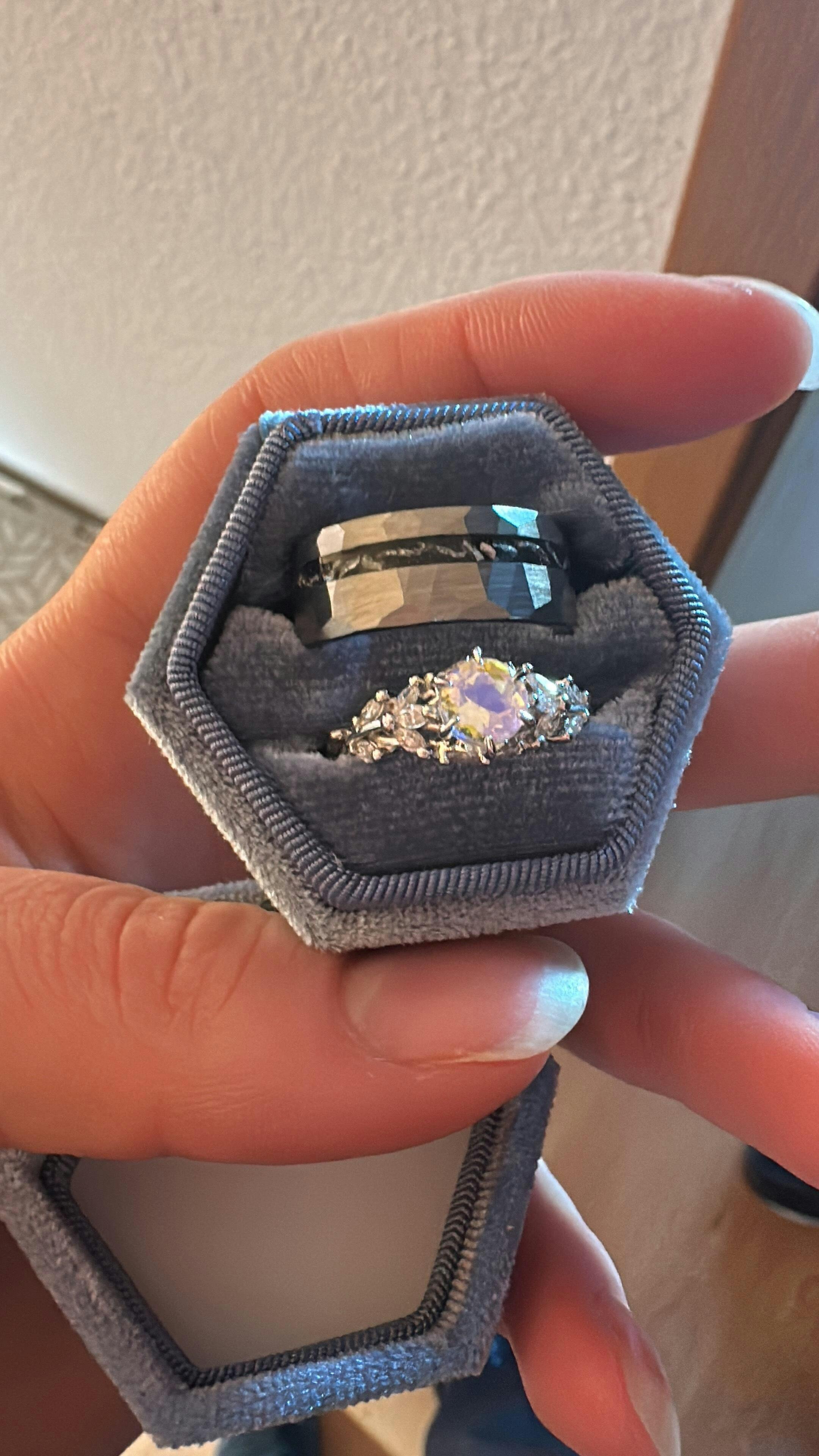
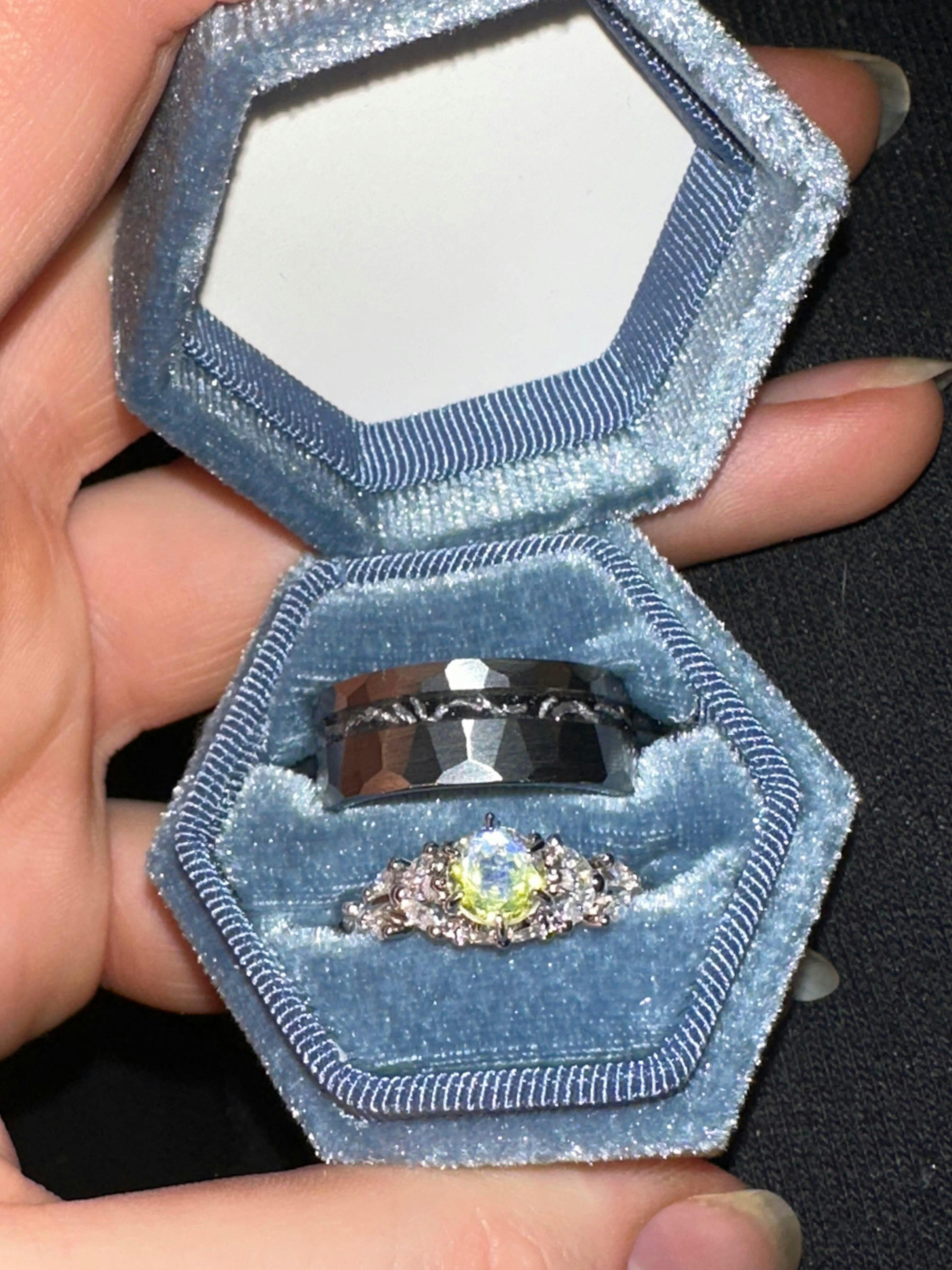
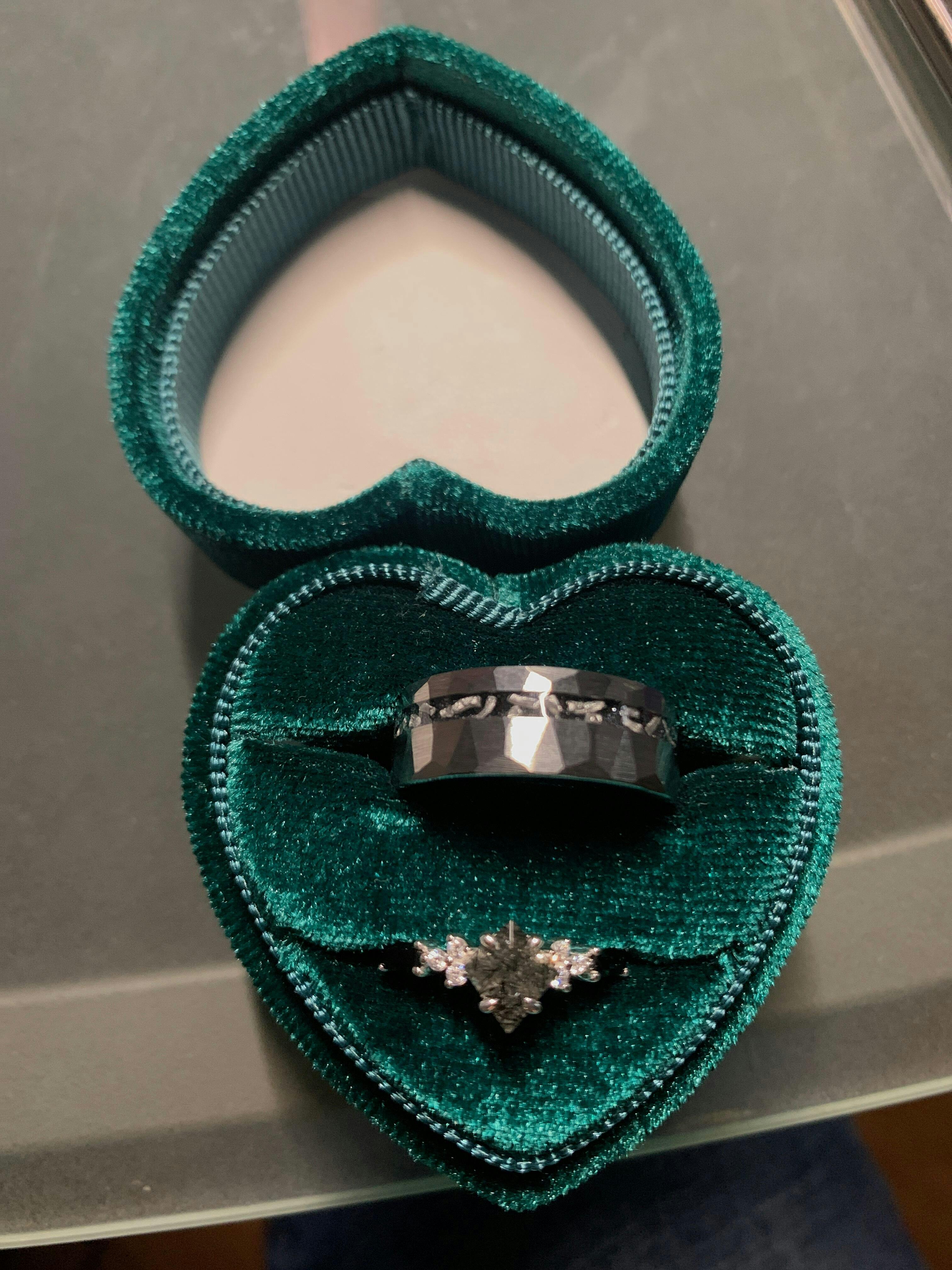
For meaningful gifts, explore shop promise rings for couple or shop Opal couple rings.
A Practical Guide to the Types of Opals
Opal types are classified by origin and body tone—Australian (black, boulder, white), Ethiopian (hydrophane), Mexican (fire), plus lab-created and composite options.
Australian Opals: The Classic Choice
Australia produces about 95% of the world's opals, offering three main types:
- Black Opal: Dark body tone (N1-N4) makes colors appear more vivid; most valuable type; primarily from Lightning Ridge.
- Boulder Opal: Thin opal layer on ironstone backing; unique patterns; from Queensland; naturally durable.
- White/Light Opal: Pale to medium body tone (N6-N9); subtle, milky appearance; most affordable; from Coober Pedy.
Ethiopian Welo Opals: The Vibrant Newcomer
Discovered in 2008, Ethiopian opals offer exceptional fire at accessible prices.
- Hydrophane nature: Can absorb water, temporarily becoming transparent; returns to its original state when dry.
- Brilliant play-of-color: Often more intense than Australian opals due to crystal structure.
- Care consideration: Avoid prolonged water exposure to prevent color changes.
Mexican Fire Opals: A Blaze of Color
Transparent to translucent body color in warm yellows, oranges, and reds—with or without play-of-color.
- Crystal fire opals: Transparent with play-of-color; premium grade.
- Common fire opals: Solid body color without play-of-color; affordable and stunning.
- Heat sensitivity: More sensitive to temperature changes than other opal types.
Natural vs. Lab-Created vs. Doublet/Triplet Opals
|
Feature |
Natural Opal |
Lab-Created Opal |
Doublet/Triplet |
|
Formation |
Natural geological process |
Laboratory synthesis |
Natural opal + backing |
|
Durability |
5.5-6.5 Mohs |
5.5-6.5 Mohs |
Varies; backing dependent |
|
Play-of-Color |
Unique, organic patterns |
Consistent, often brilliant |
Enhanced by dark backing |
|
Price |
Highest |
Moderate |
Most affordable |
|
Longevity |
Lifetime with care |
Lifetime with care |
10-20 years typical |

How to Judge Opal Quality Like an Expert
Opal quality depends on body tone, play-of-color brilliance, pattern, clarity, and cut—not traditional 4Cs like diamonds.
Color: The Two-Part Evaluation
Body Tone: Graded N1 (black) to N9 (white).
- N1-N4:Black to dark gray; premium grades
- N5-N6:Medium gray; good value
- N7-N9:Light to white; most affordable
Play-of-Color: Evaluate brilliance, color range, and pattern.
- Patterns: Pinfire (small dots), harlequin (geometric), ribbon (bands), broad flash (large areas)
- Color hierarchy: Red is most valuable, then orange, yellow, green, blue, violet
- Coverage: Full-face play-of-color is more valuable than a patchy distribution
Clarity & Transparency
Crystal vs. milky appearance affects value and beauty.
- Crystal opal: Transparent to translucent; shows depth and dimension
- Milky opal: Cloudy appearance; can be beautiful but generally less valuable
- Inclusions: "Potch" (opal without play-of-color), sand, or matrix; minimal is better
Cut & Shape
Cabochon cuts maximize play-of-color by allowing light to enter and reflect.
- Dome height: Medium dome (3-5mm) optimal for most opals
- Symmetry: Well-proportioned cuts enhance overall appearance
- Polish: High polish essential for maximum light reflection

Finding Your Perfect Opal Ring: Styles & Settings
Opals work beautifully in rings but require protective settings due to 5.5-6.5 Mohs hardness—bezel and halo settings recommended.
Are Opal Engagement Rings a Good Idea? A Candid Look
Honest assessment: Opals make stunning, unique engagement rings but require mindful wear.
Pros:
- Completely unique: No two opals are identical
- Affordable luxury: Beautiful, large stones at reasonable prices
- Meaningful symbolism: Love, passion, and creativity
Cons:
- Softer than traditional choices:5-6.5 vs. diamond's 10 or sapphire's 9
- Requires careful wear: Not ideal for very active lifestyles
- Potential for damage: Can crack or chip with a hard impact
Protective settings recommended: Bezels, halos, or low-profile settings that shield the stone. Explore shop opal engagement rings and shop white opal engagement rings.
Popular Ring Settings for Opals
- Solitaire: Clean, classic; showcases the opal's natural beauty
- Halo: Protective and glamorous; diamonds or gemstones enhance the opal
- Bezel: Maximum protection; modern, sleek appearance
- Vintage-inspired: Art Deco and Victorian styles complement opal's romantic nature
Browse specific styles: order opal rings for women • shop opal rings for men • shop vintage opal gold rings for women
Trending Opal Ring Styles for 2025
- Toi et Moi: Two stones (opal + diamond) in asymmetrical settings
- Raw/Rough Opals: Natural, unpolished stones in modern settings
- Art Deco Revival: Geometric settings with opal centers
- East-West Settings: Horizontally set oval opals for modern appeal
- Mixed Metal: Combining yellow, white, and rose gold with opals
- Minimalist Bezels: Clean lines that highlight the opal's fire
- Cluster Settings: Multiple small opals creating a larger visual impact
For specific metal preferences: shop opal rings for women white gold
The Essential Opal Care & Maintenance Guide
Opals are delicate—avoid extreme temperatures, chemicals, and impacts; clean gently with mild soap and water.
The Do's and Don'ts of Wearing Your Opal Ring
|
DO |
DON'T |
|
Remove during heavy activity, exercise, or cleaning |
Exposure to sudden temperature changes |
|
Put on after applying cosmetics, perfume, and lotion |
Use ultrasonic or steam cleaners |
|
Store separately in soft pouches |
Wear during swimming (especially pools/hot tubs) |
|
Have been professionally checked annually |
Use harsh chemicals or abrasives |
|
Clean gently with a soft brush and mild soap |
Leave in direct sunlight for extended periods |
How to Safely Clean Your Opal Ring at Home
Step-by-step process:
- Prepare: Use lukewarm water, mild dish soap, a soft cloth, and a soft brush (old toothbrush)
- Soak: Briefly dip in soapy water (30 seconds maximum)
- Brush: Gently brush around the setting and behind the stone
- Rinse: Quick rinse with lukewarm water
- Dry: Pat dry immediately with a soft, lint-free cloth
- Polish: Buff gently to restore shine
Special note for Ethiopian opals: Minimize water exposure; wipe with a damp cloth instead of soaking.
Frequently Asked Questions (FAQ)
Can you wear an opal ring every day?
Yes, with proper care and a protective setting. Remove during strenuous activities and avoid impacts. Opals at 5.5-6.5 Mohs hardness are softer than sapphires or diamonds.
What is the rarest type of opal?
Black opal from Lightning Ridge, Australia, especially stones showing red fire in harlequin or pinfire patterns. Large, gem-quality specimens can cost $10,000+ per carat.
How can you tell if an opal is real?
Natural opals have irregular, organic play-of-color patterns and may show inclusions. Synthetic opals often display too-perfect patterns. Doublets/triplets show visible layers from the side.
Does water ruin an opal?
Most opals handle brief water exposure well, but Ethiopian opals can temporarily change appearance when wet. Prolonged soaking should be avoided for all opal types.
Which is better, Australian or Ethiopian opal?
Neither is inherently "better"—they offer different characteristics. Australian opals provide traditional beauty and proven durability; Ethiopian opals offer exceptional fire at lower prices but require more careful water management.
Conclusion: Your Opal Ring Journey Starts Here
Opals represent nature's most unique gemstone creation—each stone a one-of-a-kind masterpiece of color and light. Understanding their types, quality factors, and care requirements ensures you'll choose wisely and enjoy your opal ring for decades. Whether you select a classic Australian black opal, vibrant Ethiopian stone, or fiery Mexican gem, you're choosing a piece of geological art that captures rainbows in stone.
Ready to find your perfect opal ring?
Laat een reactie achter