

A Guide to Geometric and Architectural Ring Designs

For those who see beauty in structure, line, and form, the engagement ring is more than a jewel—it’s a wearable sculpture. This guide explores architectural and geometric rings beyond traditional designs. We’ll decode the core elements of this aesthetic, showcase gemstone cuts that define it, and present a curated lookbook from Art Deco revival to modern minimalism.
- New to ring anatomy and setting vocabulary? Start with the Anatomy of a Ring and the comprehensive Ring Settings Guide.
- Love structured silhouettes? Compare shapes in the Diamond Shapes guide and explore sculptural greens in shop Emerald engagement rings.
- Planning as a pair? See coordinated ideas in A Guide to Choosing Matching Wedding Rings and the wedding ring buying guide.

What Defines an Architectural Ring? The Core Principles
Architectural rings balance structure and space—clean lines, precise geometry, and deliberate voids—drawing from design movements like Art Deco, Bauhaus, and Brutalism.
- Clean Lines & Sharp Angles: Structure over ornamentation. Knife-edge bands, squared profiles, and crisp bezels create a clear silhouette.
- Symmetry & Asymmetry: Use balance for order (Deco symmetry) or purposeful tension (asymmetrical clusters, Toi et Moi).
- Negative Space: The empty space is a design material. Split shanks, open galleries, and tension heads use air as part of the composition.
-
Art History Influences:
- Art Deco: Bold symmetry, stepped forms, geometric halos.
- Bauhaus: “Form follows function”—bezels, tension, and minimal prongs that are visibly structural.
- Brutalism: Blocky volumes, thick bezels, raw planar surfaces in high polish or satin.
Pro tip: If you love straight lines and flat planes, step‑cut stones and bezels often deliver the most “architectural” read.
The Lookbook: Exploring Architectural Ring Designs by Element
Shop by the design element you’re drawn to—line, frame, void, or orientation—rather than vague style labels.
The Power of the Line: Knife-Edge & Bar Settings
Brief: Sharp, defined edges and linear elements produce a sleek, directive silhouette. Bar settings emphasize horizontals; knife-edge shanks add crisp, ridged lines.
- Highlights:
- Knife-edge shank: angular ridge that catches light like a crease.
- Bar setting: stones separated by vertical metal bars; great with baguettes.
- Rectilinear galleries: squared undercarriages reinforce line continuity.

Micro‑win: Pair bar‑set baguettes with a knife‑edge engagement ring for a cohesive “line-first” stack.
Framing the Stone: Geometric Halos & Modern Bezels
Brief: Move beyond round halos to hexagonal, octagonal, or kite frames. Thick bezels create strong borders and sculptural mass.
- Highlights:
- Hexagon/octagon halos: emphasize corners and symmetry.
- Thick bezel: a continuous wall that reads as architecture and protection.
- Stepped halos: Deco tiers that add depth without fussiness.

Micro‑win: A square emerald (Asscher) in an octagon bezel subtly merges square and circle energies, calming the composition.
The Beauty of the Void: Negative Space & Open Designs
Brief: Open space creates lightness and tension. Split shanks and tension heads let the eye rest and the stone “float.”
- Highlights:
- Split-shank arches: air channels define the ring as much as metal does.
- Tension settings: the shank grips the stone; pure “form follows function.”
- Lifted galleries: visible gaps between band and head emphasize the void.

Micro‑win: Use a narrow wedding band beneath a lifted gallery to highlight the designed gap instead of fighting it.
Unconventional Orientations: East-West & Asymmetrical Settings
Brief: Horizontal stones and intentionally off‑balance clusters give graphic motion. Toi et Moi pairs can be angular instead of curvy.
- Highlights:
- East‑west emerald: turns linear facets into a horizon line.
- Asym cluster: offset trillions, kites, and pears create dynamic tension.
- Toi et Moi, geometric: pair a shield with a baguette for bold contrast.

Micro‑win: Keep the band minimal when the orientation is the “hero” to avoid visual noise.
The Perfect Cut: Gemstone Shapes for the Modernist
Pick cuts with planar facets and graphic outlines; step cuts read architectural, while angular brilliants add spark within strict geometry.
Step Cuts: The Hall of Mirrors
Shapes: Emerald, Asscher, Baguette
- Look: Long, linear facets produce broad, mirror‑like flashes rather than busy scintillation.
- Why it works: Flat planes and crisp corners align with architectural vocabularies.
- Pairing tips: Higher clarity is best showcased in step cuts; bezels or channel accents effectively echo the geometry.
Modified Brilliants: Angular Sparkle
Shapes: Princess, Radiant, Trillion
- Look: Brilliant facet patterns inside sharp outlines deliver fire with discipline.
- Why it works: Satisfies sparkle lovers without losing the geometric silhouette.
- Pairing tips: Cropped corners (radiant) add durability; trillions excel in asym clusters and Toi et Moi.
Unique Geometric Cuts: The Avant-Garde
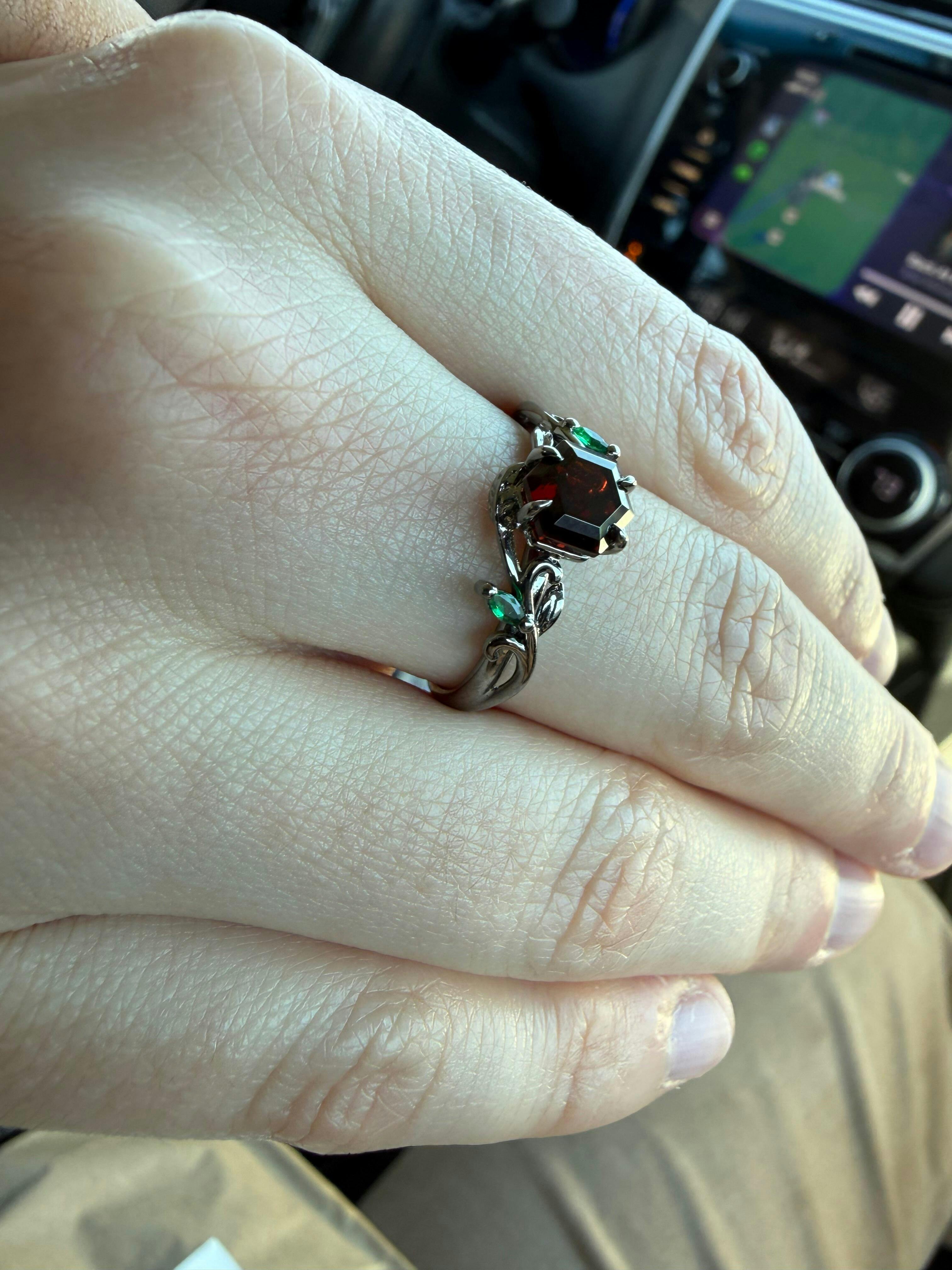
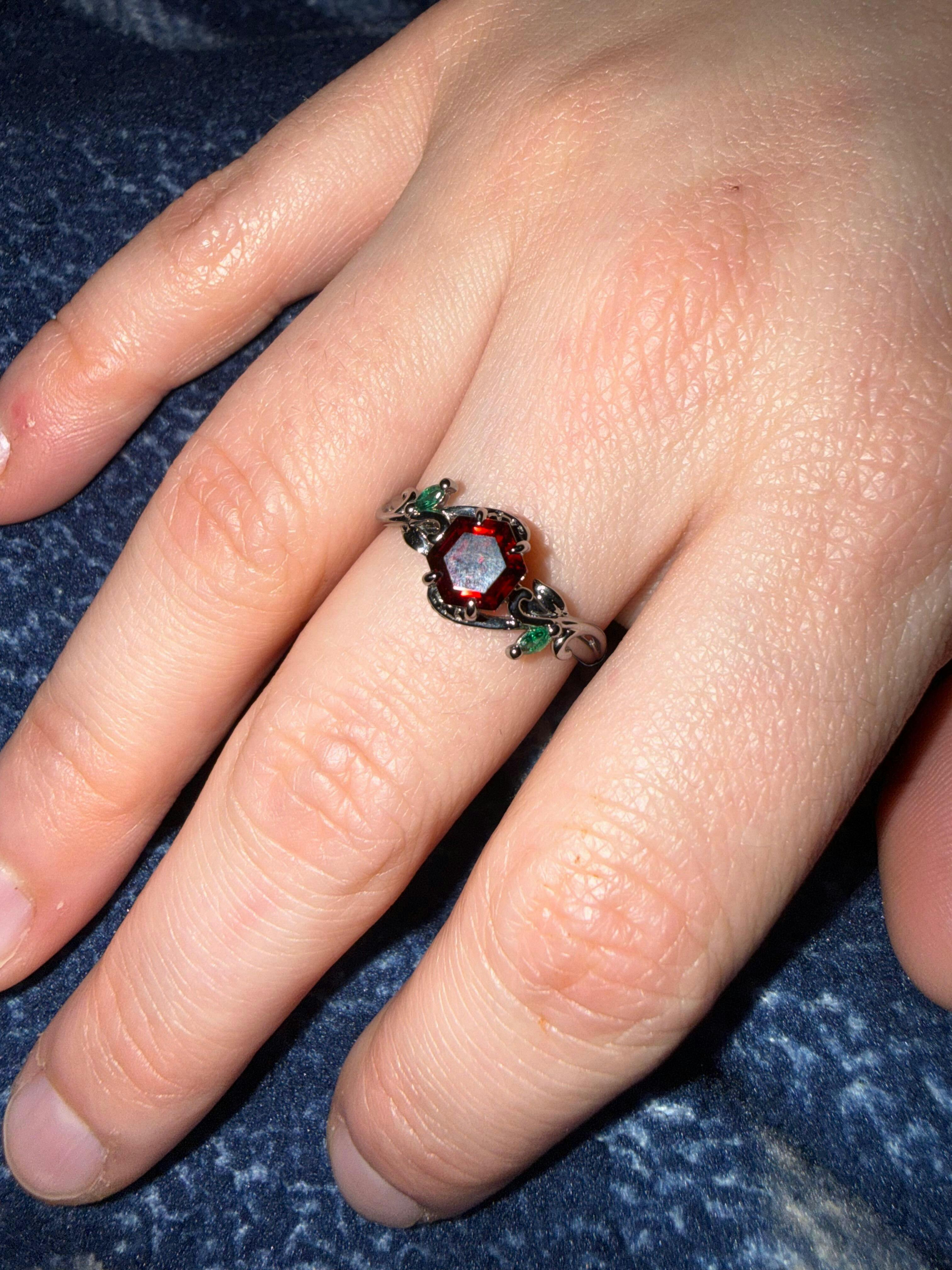
Shapes: Kite, Shield, Hexagon, Lozenge
- Look: Unmistakable outlines that telegraph design intent immediately.
- Why it works: The cut itself becomes the architecture; perfect for custom CAD/CAM builds.
- Pairing tips: Thick bezels or framed halos stabilize unusual angles; east‑west orientations shine here.
For a deeper shape context, scan the Diamond Shapes guide. If green geometry calls to you, browse shop Emerald engagement rings.
The Stacking Challenge: How to Pair a Wedding Band with an Architectural Ring
Treat pairing as a design system—trace geometry with a custom contour, frame space with chevrons or cuffs, or separate pieces to let each sculpture breathe.
The Custom-Contour Solution
Custom bands precisely trace your engagement ring’s lines for a flush fit.
- When to choose: Hex halos, kite/shield centers, low bezels, wide galleries.
- How to do it:
- Request CAD and resin/wax proofs; test on your ring for tolerance.
- Mirror one design cue (angle or step) for cohesion.
- Keep the width within ±0.2–0.4 mm of the engagement shank.

The Open Cuff & Chevron Solution
V‑shaped and open bands accommodate projections while making space a feature.
- When to choose: East‑west heads, low profiles, tension‑style rings.
- How to do it:
- Choose a chevron angle that echoes your stone’s corners.
- Consider double chevrons for stacked symmetry.
- Maintain a small, intentional gap for readability.

The “Power Couple” Solution: Wearing on Separate Hands
Let each piece stand alone when the engagement ring is a true sculpture.
- When to choose: Large bezels, bold step halos, asymmetrical statement rings.
- How to do it:
- Wear the wedding band on the right hand.
- Unite the set via shared metal or finish (e.g., brushed platinum on both sides).
- Consider a slim, graphic band to complement without competing.

Need pairing fundamentals? Read A Guide to Choosing Matching Wedding Rings and the wedding ring buying guide.
Frequently Asked Questions (FAQ)
What is an East‑West setting?
An east‑west setting places an elongated stone (emerald, oval, marquise) horizontally across the finger instead of vertically.
Are geometric rings a passing trend?
No. While popular now, they draw on timeless Art Deco principles—clean lines and structure—giving enduring appeal beyond trend cycles.
What metals work best for architectural rings?
Platinum and white gold emphasize cool, modern lines; yellow gold adds warm contrast to strict geometry. Any metal works if the form is disciplined.
Do I need a custom wedding band for my geometric ring?
Not always. Custom contours are ideal for flush fits, but chevron and open‑cuff bands often pair beautifully. Try on options to match your ring’s profile.
Explore meaningful alternatives in the promise ring buying guide or color‑driven picks in buy birthstone engagement rings. Unsure of your vibe? Take the Ring Aesthetic guide.
Build Your Own Masterpiece
Use this guide as your blueprint. Start with the core principle you love—line, frame, void, or orientation—choose a compatible cut, and design the stack strategy (contour, chevron, or separate hands). Architectural rings reward intentional choices; the result is a piece that looks as considered as it feels.
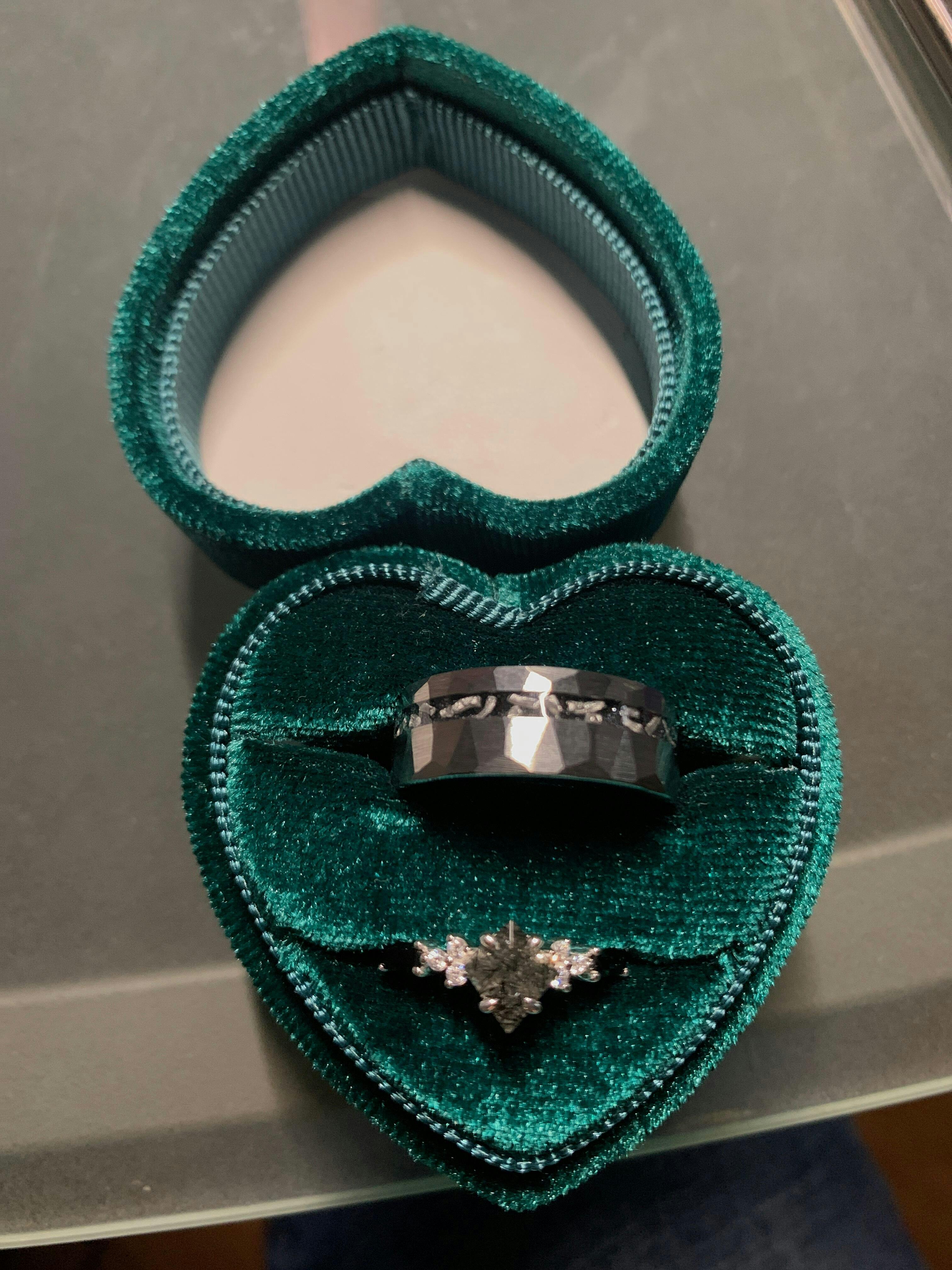
Planning as a duo? Explore sets in shop couple rings.


Dejar un comentario