

Amethyst Ring Guide

From the crowns of ancient royalty to the modern runway, amethyst has captivated for centuries with its regal purple hues. As February’s celebrated birthstone, an amethyst ring offers personal significance, vibrant color, and timeless style. This comprehensive guide helps you judge quality, understand symbolism, learn essential care, and shop our most-loved styles—so you can find your perfect purple.
- In a hurry to find your perfect piece? — Shop Our Amethyst Ring Collection Now
- Popular quick links: shop esdomera Amethyst Rings • shop amethyst engagement rings • buy men’s amethyst rings • order amethyst couple rings

Our Amethyst Ring Collection
Browse a visual, filterable gallery to quickly narrow by metal, style, shape, and budget.
Shop now:
- For her: amethyst rings for women
- For him: order amethyst rings for men
- Wedding stack: shop amethyst wedding rings • shop amethyst rings set
Judging Amethyst Quality: The 4 Cs of the Purple Gem
Color drives value; then clarity, cut, and carat shape the look and price.
Color: The Most Important Quality Factor
Deep, richly saturated purple with even tone is most prized—ideally a reddish‑purple with flashes of blue and red, and minimal color zoning.
- Visual color grades:
- “Rose de France” — Light, delicate lilac or pinkish-purple (romantic, airy).
- “Standard Amethyst” — Medium, classic purple (balanced, versatile).
- “Siberian Amethyst” — Top grade; deep purple with red/blue flashes (lux, dramatic).
Micro‑win: Ask for natural‑light photos and look for consistent color across the crown and near the girdle to avoid visible zoning.
Clarity, Cut, and Carat Weight
- Clarity: Most amethyst is “eye‑clean,” meaning no visible inclusions without magnification.
- Cut: Well‑proportioned cuts intensify color and add life. Amethyst comes in all standard shapes, plus antique cuts for a vintage look.
- Carat Weight: Because amethyst is abundant, larger stones are far more affordable than sapphire or diamond, making statement sizes accessible.
Tip: If a stone looks “inky” (too dark) indoors, consider a shallower cut or a slightly lighter tone to maintain vibrancy in all lighting.

The Meaning & Symbolism of Amethyst
Amethyst blends royal history with calming symbolism—perfect for meaningful gifts and personal talismans.
A Stone of Royalty and Power
Favored by monarchs (from Catherine the Great to the British Crown Jewels), amethyst’s purple historically signified nobility and status.
The February Birthstone
For February birthdays, it symbolizes sincerity, peace, and courage—making it an ideal birthstone ring or milestone gift.
A Symbol of Clarity and Calm
Tradition holds that amethyst supports mental clarity, serenity, and spiritual protection—often chosen for intention‑driven jewelry.
Learn more: Why choose a colorful center stone? Read Why Choose an Amethyst Engagement Ring?
A Practical Guide to Owning an Amethyst Ring
With a Mohs hardness of 7, amethyst is fine for regular wear with mindful care and protective settings.
Durability & Daily Wear: The Honest Truth
- Mohs hardness: 7/107/10.
- What it means: Tough enough for frequent wear but softer than sapphire 99 or diamond 1010; edges can chip, and surfaces can scratch.
- Recommendations:
- For daily wear or engagement rings, prefer protective settings: bezels, halos, or low‑profile prongs.
- Remove during workouts, yard work, heavy lifting, or gritty activities.
How to Clean and Care for Your Amethyst Ring
- Cleaning:
- Use warm water, mild dish soap, and a soft brush; rinse and pat dry.
- Ultrasonic: Generally fine for eye‑clean stones, but avoid if inclusions, fractures, or treatments are present. When in doubt, skip ultrasonic.
- Avoid:
- High heat and prolonged direct sunlight—both can fade color over time.
- Harsh chemicals (bleach, ammonia) and sudden temperature changes.
- Storage: Soft pouch or lined box, separate from harder stones to prevent scratching.

Pro service: Annual prong check and light polish by a jeweler keeps your ring secure and bright.
Styling Your Amethyst Ring: Metals & Occasions
Match metal to mood and choose a context—engagement, cocktail, or birthstone—to guide the design.
The Best Metal Pairings (With Visuals)
- Yellow Gold: Warm, regal, vintage appeal—amplifies richness in deeper purples.
- White Gold / Platinum: Cool contrast—makes purple “pop” with a modern, crisp edge.
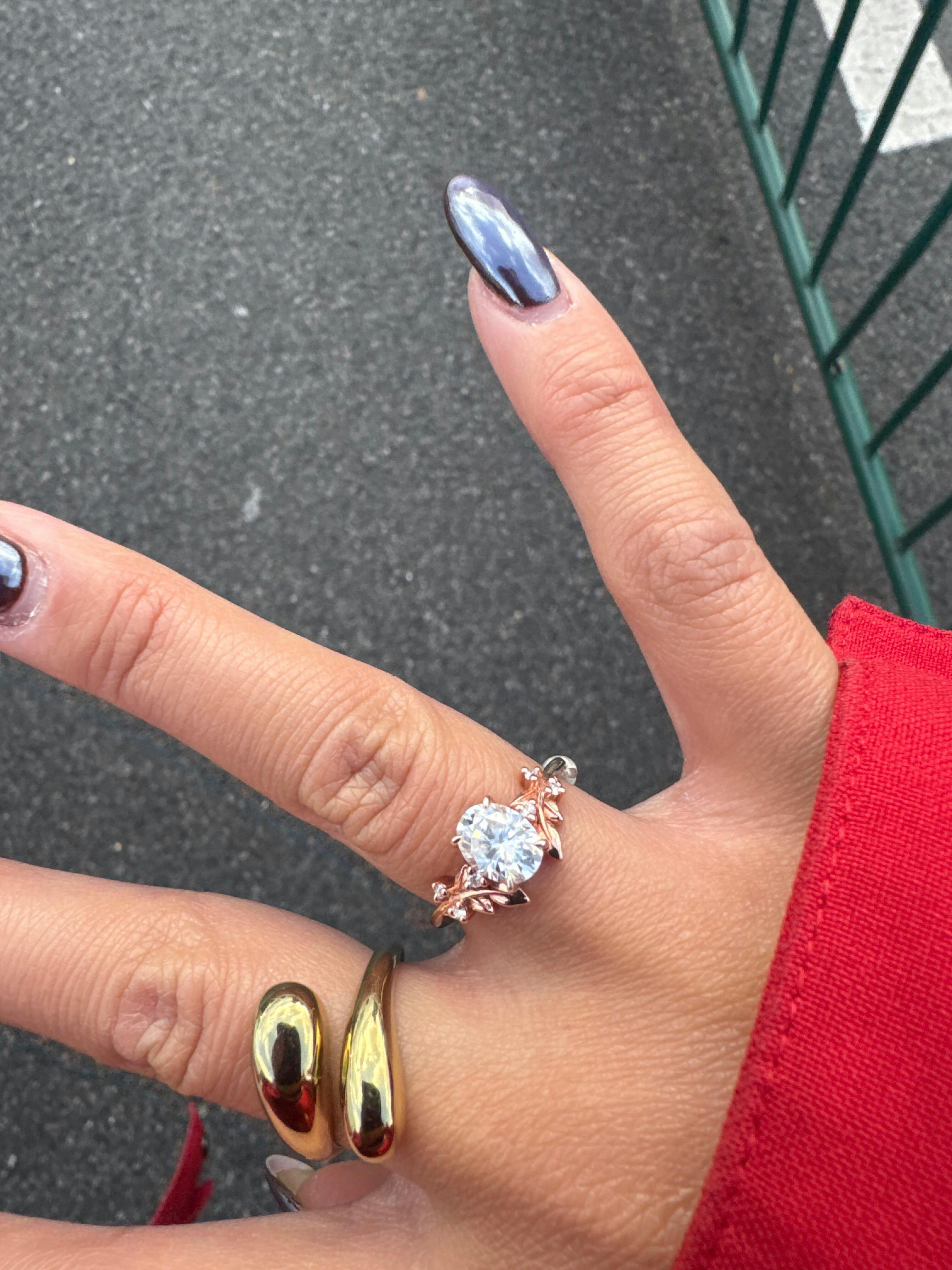
- Rose Gold: Romantic and on‑trend—plays beautifully with lilac tones.

Finding the Perfect Style for You
- For an Engagement Ring: A unique, colorful, and budget‑friendly alternative—see shop amethyst engagement rings and the guide: Why Choose an Amethyst Engagement Ring?
- As a Cocktail Ring: Go bold with oversized emerald‑cut or cushion stones—ideal for events.
- As a Birthstone Ring: A meaningful purple keepsake—giftable styles in amethyst rings for women, or order amethyst rings for men, and order amethyst couple rings.
Amethyst Rings: Frequently Asked Questions (FAQ)
Quick, scannable answers for confident decisions.
Is amethyst an expensive gemstone?
No. It’s generally very affordable—even in larger sizes. Color richness is the main price driver.
Does amethyst fade in the sun?
Yes. Prolonged direct sunlight or heat can fade color. Store away from light when not wearing.
What’s the difference between natural and lab-created amethyst?
Lab‑created has the same chemistry and structure as natural, but is grown in controlled conditions—typically flawless and more affordable. Check product descriptions.
Is it okay to wear an amethyst ring every day?
Yes—with caution. At Mohs 7, it’s more scratch‑prone than sapphire/diamond. Choose protective settings and mindful wear.
Find Your Perfect Purple Hue
Amethyst’s royal color, meaningful symbolism, and approachable price make it a joy to own. Choose the color grade you love, pair it with a protective setting, and pick a metal that suits your style—then enjoy a gemstone that feels as personal as it looks.


Lascia un commento