

Custom Ring Design Guide: From Your Idea to a Real Ring

Overview: Why Is Custom Ring Design Important in 2025?
With a custom ring design, you can make a piece of jewelry that is as distinctive as your love tale.
The sentimental value is immense—a personalized ring is a timeless representation of individual dedication, fashion, and narrative.
Custom rings offer you complete control over every aspect, guaranteeing genuine uniqueness and quality in contrast to mass-market substitutes.
What Sets Custom Rings Apart from Store-Bought Alternatives?
Custom-made rings have advantages over store-bought ones.
Use distinctive metals, engravings, stones, and symbols to express your individuality.
Value: Create something unique, frequently with greater sentimental value over time, and the potential to leave a family legacy.
Quality oversight: Expert input and quality checkpoints are possible with custom projects.
How Well-Liked Is Personalization in the Jewelry Market for 2025?
Custom rings are more popular than ever in 2025. According to recent industry data:
Custom engagement rings now account for over 35% of sales, up from 22% in 2019 (Jewelers of America, 2025).
For both engagement and commitment rings, Millennials and Gen Z consumers vastly favor custom designs.
Custom ring orders are up 20% year over year due to lab-grown diamond customizations and AI-powered design tools.
How Will This Guide Help You?
You will be given:
Detailed frameworks for project management, budgeting, and planning.
There are diamond and gemstone selection strategies that go beyond the 4Cs.
Innovative design technology advice, quality assurance procedures, and best practices for collaboration.
Proven tips for avoiding typical mistakes and making a ring that will last a lifetime.
Also see: How to Find Your Personal Ring Style
Foundation Planning: How Do You Start Making a Custom Ring?
A. How Can a Custom Ring Budget Be Engineered to Be Realistic?
Determining a realistic ring budget is a systematic planning process; it involves more than just choosing a figure.
Budget Structure:
Center Stone: 40–50% of the total
Setting: 20–30%
Work: 15–25%
Additional Components:10–15% (shipping, certification, engravings, and accent stones)
|
Item |
% of Total Budget |
Typical Range |
|
Center Stone |
40–50% |
$1,200 – $6,000 |
|
Setting |
20–30% |
$700 – $3,000 |
|
Labor |
15–20% |
$500 –$2,000 |
|
Extras (Accent, Docs) |
10–15% |
$300 – $1,500 |
Hidden Cost Inventory:
- Insurance and shipping
- Charges for engraving
- Evaluation and certification
- Resizing charges
- Custom model/CAD fees (if applicable)
Strategies for Budget Optimization:
Give the most significant feature (stone, metal, or detail) more attention.
To get the most size and quality out of your investment, look into lab-grown diamonds or other gems.
Talk about transparency with your jeweler: Ask for a line-item quote for each part of the project.
Planning a Payment Timeline:
A 25–50% deposit is expected; the remaining amount is due at delivery or milestones.
B. How Do You Find Out What Your Ring Style and Vision Are?
Successful custom designs begin with self-awareness and clear inspiration.
Lifestyle Evaluation:
Wearing gloves, engaging in active hobbies, or doing hands-on work every day? Select bezel, low-profile, or long-lasting settings.
Fashion-forward or a fine artist? Be receptive to unusual metals, striking shapes, or stones.
Framework for Style Personality:
|
Personality |
Preferred Ring Styles |
Example Features |
|
Classic |
Solitaire, three-stone |
Round, oval, gold |
|
Modern |
Minimalist, geometric |
Bezel, east-west, platinum |
|
Vintage |
Milgrain, filigree, halos |
Emerald cut, antique finish |
|
Romantic |
Floral, heart-shaped, pavé |
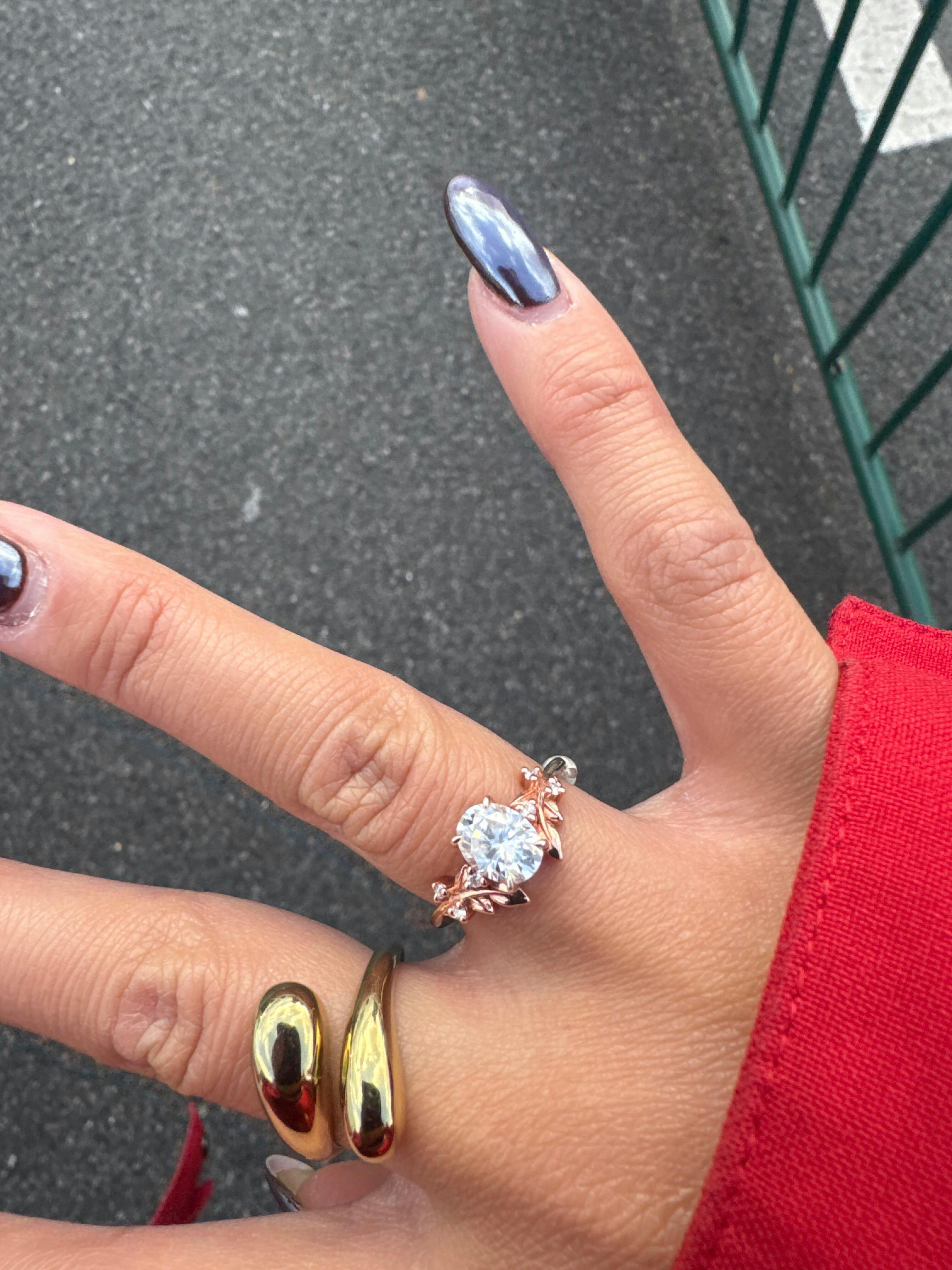
Rose gold, pink gems |
|
Bohemian |
Asymmetry, stackables, colors |
Mixed metals, sapphires |
Inspiration Collection:
Make a digital mood board using the Gemist app, Canva, or Pinterest.
Save pictures of your favorite art, jewelry, or celebrity rings.
Unexpected Proposal? Research Partner Preferences:
Examine their jewelry box.
Consult your loved ones.
Take note of their regular fashion cues.
Take into Account Family and Cultural Traditions:
Metals, motifs, or stones from the family may hold special significance.
Certain colors or design components are preferred in some cultures.
C. How Do You Manage the Project and Plan the Timeline?
From conception to delivery, custom rings typically take 8–12 weeks.
Example Timetable:
Discovery/Consultation: 1-2 weeks
Approval/Design Development: 2-4 weeks
Production time: 4–6 weeks
Seasonal Factors:
Delays may occur during Valentine’s Day, holidays, and the “high season” for weddings (late spring to summer).
To avoid rush fees, place your order in advance.
Planning for Milestones and Communications:
Utilize milestone check-ins for every stage.
Remind people when proof approvals, payments are due, and delivery windows are approaching.
Include a buffer of one to two weeks in case of unforeseen delays.
Mastery of Diamonds and Gemstones: What You Should Know Before Choosing Stones?
A. Beyond the four Cs, what other advanced criteria should be used to guide the selection of diamonds?
True connoisseurs look beyond the 4Cs, which stand for cut, color, clarity, and carat.
The 4Cs Explained:
Cut: Most important for sparkle. Even in lower color grades, brilliance is maximized by an ideal or excellent cut.
Color: D–F are colorless, but they are expensive and hard to find. G–I offers excellent value, particularly in yellow/rose gold, but has subtle tints.
For the most part, VS2–SI1 are “eye clean.” If set with emerald or asscher shapes, choose higher grades because step cuts highlight inclusions more.
Carat: Dimensional spread, depth, and cut can make a 0.90ct diamond appear as large as a 1.00ct, so size isn’t everything.
In-Depth Selection Elements:
Light performance is affected by symmetry and polish.
Fluorescence: Under UV light, it can “whiten” nearly colorless stones, but it also alters their appearance.
For a cohesive appearance, make sure the center and accent stones match in terms of color and clarity.
Also See: Lab-Grown vs. Natural Diamond Rings — Making an Informed Choice
B. Which Diamond Substitutes Are Often Used in Custom Rings?
- Sapphire: a rainbow of colors, long-lasting.
- Emerald: Deep hue, timeless, but requires careful placement.
Morganite & Moissanite: Reasonably priced, attractive, and highly sparkling.
A deeper sense of personal significance can be created with birthstones or colored diamonds.
Important Things to Remember:
Lab-Grown vs. Natural: Lab-grown stones can have the same appearance as their mined counterparts, but they are typically 30–50% less expensive and have a smaller environmental impact.
Ethical sourcing and certification: Whether purchasing natural or lab-grown products, request proof of origin and conflict-free sourcing.
C. How Can Stones Be Selected Strategically?
Making the Most of Style & Budget:
To save a lot of money, go for a slightly lower carat “benchmark” (for example, 0.95ct vs. 1.00ct).
Compared to round or princess cuts of the same weight, oval, pear, marquise, or emerald cuts frequently appear larger.
Hand Shape Guidance:
Long fingers: Long stones (oval, emerald)
Petite hands: Cushions, smaller rounds
Wide fingers: Bold shapes, halo, or cluster
Proportion & Matching:
The color and clarity of the center and side stones should “grade match.”
For harmony and security, accent stones need to be set correctly.
D. How Significant Are Appraisal and Certification?
Authorities for Certification:
|
Body |
Reputation |
Included |
|
GIA |
Gold standard |
4Cs, diagrams, ID with laser inking, origin report |
|
Light performance, symmetry, and cut scoring |
AGS |
Top U.S. body |
|
Good for lab-created diamonds |
IGI/GCAL |
Laser inscription, grading |
Always ask for the report, read it, and make sure the stone matches.
Insurance and Appraisal:
Insurance and estate value require independent appraisals.
Take pictures and keep records apart.

Design Development Process: What Is the Process of Turning an Idea into a Custom Ring?
A. Which Metals Make the Best Custom Rings?
Price, durability, and appearance are all impacted by the metal you select.
|
Metal |
Durability |
Color/Finish |
Pros |
Cons |
|
Platinum |
High |
Bright white |
Strong, hypoallergenic |
Heaviest, costly |
|
White Gold |
Moderate |
Cool white (rhodium-plated) |
Affordable, widely available |
Rhodium re-plating needed |
|
Yellow Gold |
Good |
Warm yellow |
Classic, malleable |
Prone to scratching |
|
Rose Gold |
Good |
Pink/copper hue |
Trendy, unique |
Contains copper (may cause allergies) |
|
Palladium/Titanium |
Very High |
Greyish-white |
Lightweight, strong |
Harder to resize |
Mixed metal rings are popular—mix two colors to create a distinctive style.
B. Which Configurations and Styles of Settings Work Best?
|
Style of Setting |
Synopsis |
Benefits |
Drawbacks |
|
Solitaire |
One central stone |
Classic, accent stone |
Low security |
|
Halo |
Center stone plus halo |
Looks bigger and more glittery |
More difficult to clean |
|
Three-Stone |
Center plus two sides |
Custom, symbolic combinations |
Able to overwhelm small hands |
|
Bezel |
Stone is encircled by metal |
Best protection |
Diminishes apparent size |
|
Tension |
Stone “floats” |
Dramatic, modern |
Needs exact fit |
|
Vintage |
Filigree, milgrain |
Romantic, rich in details |
More delicate |
Prong Tips: Claw/prong settings for drama, rounded prongs for comfort.
The most comfortable band width for everyday use is between 1.8 and 2.2 mm.
C. How Can the Design Be Improved and Customized?
The process’s magic lies in customization:
Special dates, initials, or confidential messages can be engraved.
Under-gallery stones and colored gems are examples of hidden details.
Family stones: Restoring heirlooms to contemporary environments
Proportion and Symmetry:
Verify that every component appears balanced and “flows” together; before approving, examine the CAD from all sides.
Use wax or 3D-printed models to test the comfort and size of the ring.
Discover: Buying Guides for Couple Rings
Tools & Technical Implementation: Which Technologies Allow Custom Designs?
A. How Can a Custom Ring Design Be Visualized and Approved?
Hand sketches: Provide a natural, “from the bench” look.
- CAD designs: Before any materials are cut, allow for precise resizing, multi-iteration changes, and 360-degree digital review.
Physical “try-on” and comfort/sizing checks are made possible by the use of 3D printing and wax models.
- Digital AR apps and virtual reality (VR): See a real-time preview of the ring on your hand.
B. How Do Custom Rings Get Made?
The most popular technique is casting, in which the stone is placed inside a mold created with design wax.
- Fabrication: Metalworking methods for one-of-a-kind or hand-finished art rings.
- Stone-setting: For safety and accuracy, use a hand or microscope mount.
Cutting-edge QA: All respectable jewelers employ metal purity analysis and high-magnification inspection.
C. Which technological tools are available to consumers?
Design apps: CustomMade (web & mobile), Gemist, and Ring Builder
Online platforms and AR try-ons: James Allen’s virtual studio, Blue Nile’s visualization tool
Slack, Zoom, and cloud-based portals facilitate remote collaboration.
Expert Collaboration & Choosing: How Do You Locate the Best Jeweler?
A. How Can I Pick the Best Jeweler?
Local vs. online: While local stores offer hands-on experiences, online retailers frequently offer greater stone access and lower prices because of lower overhead.
Credential check: Seek out employees with GIA training and RJO or AGS memberships.
Look through portfolios to find a jeweler whose previous work fits your style.
Transparency: Request contracts that include a detailed timeline, itemized line items, and warranty terms.
B. How Can a Successful Working Relationship Be Created?
Consultation preparation: Bring questions, a budget, and inspirational photos.
Feedback management: Expect 2-4 design iterations, communicate openly, and use milestone approvals.
Request photo and video updates throughout the casting, stone-setting, and finishing processes.
Resolving issues: Verify that your contract addresses refunds, rejections, and modifications.
Important Errors & Avoidance: What Should You Steer Clear of When Designing a Custom Ring?
A. Which Errors in Design Can Destroy a Custom Ring?
Errors in proportion: Bulky settings on small hands or small stones on thick bands appear out of proportion.
Setting height: Tall-set stones feel heavy or snag easily when worn on a daily basis.
Stone security: Loss may result from aesthetic settings that employ tension or weak prongs.
Following trends mindlessly: Mix trends with personal classics; today’s fads may seem outdated tomorrow.
B. Which business and process errors cost money and time?
Inadequate planning: Hurried work results in costly corrections or regrettable designs.
Inadequate vetting of jewelers: Dealing with unqualified sellers significantly raises risk.
Budgets can be ruined by omitting insurance, shipping, or resizing fees.
Inadequate sizing: Inaccurate measurements lead to discomfort and additional expenses.
Communication breakdown: Obtain written confirmation of all promises or modifications.
Perfect Fit & Ring Sizing: How Can You Get the Comfort You Want?
A. Which Methods Are Best for Determining the Correct Ring Size?
Professional sizing is the most accurate, particularly for wedding and engagement bands.
At-home tools: Metal or plastic sizers are preferable to printed ones.
Time of day: Variations in finger size should be noted; take several measurements to prevent an overly tight fit.
For precise “surprise” sizing, ask friends, borrow another ring, or measure while they’re sleeping.
Resource: How To Determine Ring Size
B. How Can Custom Ring Fit Be Optimized?
Wider bands fit tighter; if the band is more than 4 mm, size up a bit.
Comfort fit: Curved or tapered interiors improve comfort on a daily basis.
Balance: Take into account inset contours for weight distribution; heavier rings may spin.
Resizing: Find out if your design requires a flexible “sizing bar” or if it can be resized in the future.
Quality Control & Delivery: How Can You Make Sure Everything Is Perfect at the End?
A. What Does the Final Inspection Involve?
Verify that all of the gems are tight and secure.
Finish: Even polish, free of nicks and sharp edges.
Before making the final payment, try it on.
Documentation: Obtain the design files, insurance appraisal, certificate, and care manual.
B. What Happens After the Ring Is Delivered?
For high-value items, tracked and insured shipping is standard.
Preliminary care: Steer clear of strenuous activities for a few weeks, as certain environments require “break-in.”
Warranty: To be covered, register as soon as you can.
Photograph:Take thorough images for documentation.
Long-Term Ownership & Care: How Should Your Ring Be Maintained and Safeguarded?
A. Which Daily Maintenance Procedures Are the Best?
Use a gentle brush and mild soap to clean on a regular basis.
It is advised to have a professional checkup every year for refinishing and proper security.
To avoid scratches from other jewelry, store it separately.
Remove when cleaning, playing sports, or doing heavy work.
Warning signs: Discoloration, bent prong, or loose stone—ask for professional repair right away.
B. How Are Your Investments Protected by Legacy Planning and Insurance?
Evaluation: Revise coverage after significant upgrades or every three to five years.
Policy: Select loss/damage and “mysterious disappearance” coverage options.
The ring and the paperwork for will and legacy planning should be listed in the estate.
Upgrades: Current settings can be changed; inquire about potential future changes.
More Complex Personalization Choices: What’s Beyond the Fundamentals?
A. Which Design Concepts Will Be the Most Innovative in 2025?
Little sapphires or birthstones beneath the setting are examples of hidden gems.
Interchangeable bands: Vary your appearance for various events
Eco-friendly materials: Lab-grown gems and recycled gold
Symbolism: Family, spiritual, or cultural themes
Integrated technology: NFC tags to engrave a digital message
B. Which Custom Ring Trends Are the Most Important for the Future?
New cuts, colored gems, and hybrid materials are examples of emerging stones.
AR try-ons and AI-powered design generators are examples of tech-forward experiences.
More couples are choosing to include meaningful, narrative-driven elements for deeper personalization.
Sustainability: Increasing demand for recycled options and ethical, traceable supply chains
Also see: 2025 Hottest Engagement Ring Trends_
Conclusion & Next Steps: What Do You Do?
Important Lessons Learned:
When used carefully, custom rings provide unparalleled quality, emotional significance, and legacy potential.
It is possible to maximize transparency and satisfaction at every stage, from budgeting and stone selection to design and delivery.
Next Actions:
- Make your story and style clear.
- Create and improve your budget.
- Examine technological resources and design inspiration.
- Examine and make contact with trustworthy custom jewelers.
- Accept your ideal ring and relish the process of creating it!
Hub of Resources:
- How To Determine Ring Size
- Promise Ring vs. Engagement Ring
- Wedding Band vs. Wedding Ring
- Buying Guides for Couple Rings
- Lab-Grown vs. Natural Diamond Rings
- How to Find Your Personal Ring Style
- 2025 Hottest Engagement Ring Trends
Professional Advice:
To start your process off right, schedule a consultation with a qualified jeweler.


Lascia un commento